
Straightforward clear, $150–$300
A blockage in the pan or its bend, cleared in one visit during business hours. Most single-toilet blockages sit here.
A toilet that will not flush is not a wait-and-see problem, especially in a one-bathroom home. We clear it same-day, find out why it happened, and fix running, leaking and constantly-blocking toilets properly across Castle Hill.
One-off blockages are usually about what went down: wipes sold as flushable that are not, sanitary items, a toy launched by a toddler. Those clear quickly with the right tools and stay cleared. The plunger-and-hope approach fails when the blockage is compacted further down the pan’s S-bend than a plunger can push, and forcing it usually just packs it tighter.
A toilet that blocks every few weeks is a different animal, that is almost never about the toilet. It is a symptom further down the line: tree roots in the sewer, a bellied pipe holding waste, or scale narrowing an older clay drain. Common around Castle Hill, where mature gardens sit over original earthenware sewers. That is when the CCTV camera goes down, because clearing the symptom monthly is more expensive than fixing the cause once.

Newer developments around Castle Towers and the Metro share drainage runs, so one blockage needs a camera and the right access to clear properly.
In an apartment this is the first thing to establish, because it decides who pays. A blockage in the pan or the branch serving only your bathroom is yours. A blockage in the stack or the line serving the building is the owners corporation's.
The quick tell: if your fixtures back up when nobody in your apartment is using water, or worse, when a neighbour runs theirs, the problem is downstream of your lot and it is not your bill.
Many original brick homes still run earthenware pipework that cracks as the Hills’ reactive clay soil moves through wet and dry spells.
Clay and earthenware were laid in short lengths with mortared or rubber-ring joints, and it is almost always the joints rather than the pipe that fail. Ground movement opens them a fraction, and a fraction is all a root or silt needs.
The pipe barrel itself is often in good condition after eighty years. That matters because it means the repair is usually about sealing joints, not replacing a run, a much smaller job than most people brace themselves for.
Castle Hill’s leafy, established streets and mature gardens send roots hunting into old pipe joints, a top cause of recurring blockages here.
The tree is rarely the villain, and removing it is rarely the answer, a mature tree is worth more to the property than the drain repair costs, and the roots already in the line do not vanish when the trunk goes.
What helps: knowing where your line runs so future planting goes elsewhere, and sealing the joints that are already open. If the tree is on council land or a neighbour's property, the repair is still yours, but the camera footage is what any conversation with them needs to start from.
A shared stack collects everything from every apartment on it, and a single household flushing wipes can block a line for forty other people. You will never know which one, and it does not matter, the fix is the same.
Castle Hill sits high in Sydney’s Hills District (postcode 2154), a leafy, established suburb bordering Baulkham Hills, Cherrybrook, West Pennant Hills and Kellyville. From older brick homes on generous blocks to the newer townhouses around Castle Towers and the Metro, its drains see everything, and we know the local ground well.
What does help is a note from the building manager to all residents after a stack blockage. It is the cheapest preventive measure available in a block and it is almost never done until somebody produces evidence of the cause.
If your toilet blocks roughly the same number of months apart each time, that is not bad luck and it is not what is being flushed. It is a fixed defect in the line filling at a predictable rate.
Write down the dates. Two or three of them tell us more than a description of the symptoms, because the interval indicates how fast the obstruction rebuilds, which narrows down what it is before the camera goes in.
Strata committees respond to documentation, not to descriptions. A resident reporting a recurring smell or a slow drain gets minuted; a camera report naming the line, the defect and the likely cost gets a quote requested.
So when we attend an apartment we write it up that way, which line, which lot, what the camera showed, and what happens if it is left. You can hand that straight to the strata manager without having to argue the case yourself.
A blockage in the pan or its bend, cleared in one visit during business hours. Most single-toilet blockages sit here.
A compacted or deeper blockage needing an electric eel or jetter time rather than hand tools.
The same jobs at night, on weekends or public holidays, once after-hours call-out and labour rates apply.
For repeat offenders: CCTV down the line to find the real cause. You see the footage, and any quote is built on it.
Running and leaking toilets are usually valves, washers and outlet seals, small parts, fixed same visit. A full new suite installed is quoted before anything is touched.
Business-hours versus after-hours is the single biggest cost lever, if it can safely wait for daylight, we will say so on the phone. Figures here are indicative of the 2026 Sydney market rather than a quote from us, you get your own number as a fixed price before any work starts.

Just this toilet, or other drains too? Overflowing or slow? The answers set the urgency and the toolkit, and you get the price picture before we roll.
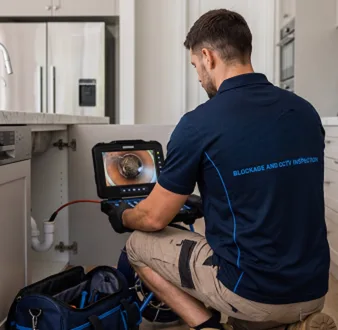
Floor covered before anything starts. Closet auger for the pan; eel or jetter when the blockage lives deeper in the line.
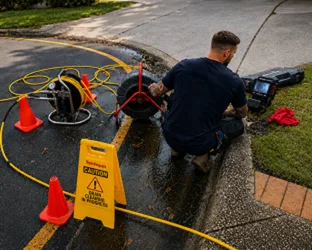
Obvious one-off causes end the job there. A repeat pattern sends the camera down, because recurring blockages are never really about the toilet.

Whatever the lens found, roots, a belly, failing clay, gets a fixed-price fix: jetting, relining or repair. The monthly-blockage cycle ends.
That is emergency-grade in our book, whatever the clock says. The phone answers 24/7.
Cleared today, the cause named, a fixed price first: and the bathroom cleaner than we found it.

Leave your details and our local Castle Hill team will call you back fast.