
Flexible hose & connector fixes, $100–$200
The brittle connector behind the cooktop, small part, common leak source, quick fix.
Gas is the one trade where "pretty confident" is not a standard. Leaks found and repaired, cooktops and heaters connected, lines run and certified: all of it by licensed gasfitters, all of it pressure-tested before the gas goes back on in Castle Hill.
In NSW, every job on a gas installation: connecting a cooktop, moving a bayonet, repairing a line: must legally be done by a licensed gasfitter, and for good reason: the failure modes are leaks, fires and carbon monoxide, none of which give second chances. It is also why "the handyman hooked it up" appliances are the single most common source of the leaks we get called to.
Licensed does not just mean allowed. It means the job finishes with a manometer pressure test proving the whole installation holds, appliances checked for correct operation and ventilation, and work done to AS/NZS 5601, the standard that decides what your insurer thinks of the installation if anything ever goes wrong. Across Castle Hill and the Hills District, that is the finish line on every gas job we do.


Putting a gas cooktop where there was not one, or moving an appliance during a renovation, is rarely just plumbing in a block. It usually requires an owners corporation approval, sometimes a by-law, and always correct ventilation and flueing for the space.
Castle Hill is overwhelmingly separate houses, 73.7% of occupied dwellings by the ABS 2021 Census, so the gas work runs the full range: cooktops and ovens, outdoor hot water units, heaters, and new runs for extensions.
We will tell you what the work needs before you go to the committee, so the application you submit is the one that gets approved rather than the one that comes back with questions.
The procedure does not change because you have neighbours, but the urgency does, a leak in a shared building affects everyone on that riser.
Castle Hill sits high in Sydney’s Hills District (postcode 2154), a leafy, established suburb bordering Baulkham Hills, Cherrybrook, West Pennant Hills and Kellyville. From older brick homes on generous blocks to the newer townhouses around Castle Towers and the Metro, its drains see everything, and we know the local ground well.
Leave, take others with you, and call 131 909 from outside. Then notify the building manager. Do not attempt to isolate anything in a common meter room yourself; the network operator attends around the clock and that is what they are for.
In a block, the supply to the building and the risers are common property; the pipework and appliances inside your lot are generally yours. Individual meters may sit in a common meter room, which frequently confuses the question of access.
Establish it before arranging work. Anything on common property needs the owners corporation to authorise it, and a plumber cannot simply proceed because a resident asked.
They run at different pressures with different jets. An appliance made for one will not operate safely on the other without a proper conversion kit fitted by a licensed gasfitter.
This matters most with secondhand appliances, which is where we find it. If you are buying used, check what gas it is set up for before it arrives, conversion is sometimes possible and sometimes not.
Gas lines, bayonet points and appliance connections cost a fraction of their normal price while walls and floors are already open. Retrofitting the same work later means opening finished surfaces and making them good again.
If a renovation is planned, it is worth deciding then about a future cooktop, an outdoor point or a heater, even if the appliance itself comes years later. Capping a prepared point costs almost nothing.
An appliance service is combustion analysis, not a clean. The technician measures what is coming out of the flue, checks the burner and heat exchanger, verifies ventilation and confirms the safety devices work.
Manufacturers generally specify every two years for heaters and annually for anything unflued. Very few households do it, and it is the single most effective thing you can do about a risk you cannot smell.
The brittle connector behind the cooktop, small part, common leak source, quick fix.
Leaks at threads, valves and joints: found, sealed properly, retested under pressure.
Corroded or damaged runs cut out and replaced. Concealed lines needing access run $800–$2,500.
Cooktop, oven or heater connected, tested and certified. More if a new line or bayonet has to be run to reach it.
The going Sydney range for licensed gas work in 2026, with call-out fees typically $80–$150.
The receipt that matters is not paper: it is the needle on the manometer refusing to drop. Figures here are indicative of the 2026 Sydney market rather than a quote from us, you get your own number as a fixed price before any work starts.
Suspected leaks start with the supply off at the meter and air moving through the space. Diagnosis begins only after the installation stops feeding the problem.
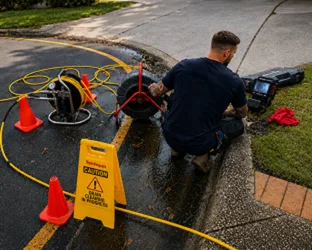
A manometer says whether the system is losing gas; detection fluid and instruments then walk the installation to the guilty joint, fitting or run.

The failed component comes out and compliant material goes in, to AS/NZS 5601, whether that is one connector or metres of rerun line.
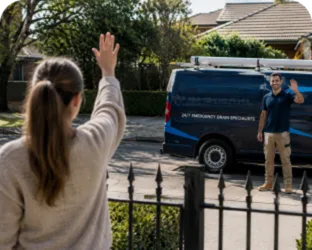
The full installation holds on the gauge or we are not done. Appliances relit, flames checked blue, ventilation confirmed, compliance documented.
Nor should it, legally. One visit: connected, tested, certified, warranty intact. The proper way is also the cheap way, counted honestly.
Licensed gasfitters, every job pressure-tested and certified. Smell gas right now? 131 909 first, then us.

Leave your details and our local Castle Hill team will call you back fast.