
Call-out fee, $80–$180
What most Sydney plumbers charge to attend. Ask for it up front, anyone who will not name it on the phone is telling you something.
Some plumbing waits politely for a weekday. The rest, water through a light fitting, sewage in the shower, a whiff of gas: needs someone now. Our Castle Hill line is answered by a licensed plumber around the clock, and the first thing you get is help, not a hold queue.
Here is the test we give callers: is it spreading? Water spreading through a ceiling, waste rising in a floor drain, gas reaching more of the house: spreading problems are emergencies, because every hour of waiting is added to the repair bill. Static problems, a drip into a bucket, a slow drain with a second bathroom available, can usually sleep until daylight rates. Tell us what you see and we will sort it into the right column honestly.
The other half of the job happens before we arrive. Whoever answers your call talks you through the shut-off that stops the damage, the meter valve for water, the cylinder valve for a failing tank, evacuation and 131 909 for gas, so by the time the van reaches Castle Hill, Baulkham Hills, Cherrybrook, Kellyville or anywhere across the Hills District, the situation is stable and the repair can start instead of the triage.


Newer developments around Castle Towers and the Metro share drainage runs, so one blockage needs a camera and the right access to clear properly.
In a block, a single blockage low in the stack shows itself in whichever apartment sits lowest, which is frequently not the apartment that caused it. If your ground-floor shower is backing up when the neighbours run water, the line is telling you the problem is downstream of all of you.
That is worth knowing before anybody starts apportioning blame or cost. A camera up the stack settles it in twenty minutes, and the footage is what the strata manager needs to act on rather than a description of what somebody saw.
Castle Hill’s leafy, established streets and mature gardens send roots hunting into old pipe joints, a top cause of recurring blockages here.
On sloping ground the problem is rarely where the symptom is. Water leaves a failure at the highest point and surfaces at the lowest, which can be several properties away and well downhill of anything you would think to look at.
It is also why a neighbour's overflowing gully is sometimes your blocked line, and occasionally the reverse. We work uphill from the symptom rather than digging where the water appears.
Castle Hill’s elevated, sloping terrain sends heavy-rain runoff surging through stormwater pits that choke and back up.
A yard that floods in every serious downpour is a different problem from one that flooded once in a freak storm. The first is a blocked or undersized line and it will keep happening; the second is weather.
Telling them apart takes a camera on a dry day, not a guess in the rain. If it has happened twice, book the inspection between storms, clearing a surcharging pit at the height of it costs more and tells you less.
Castle Hill sits high in Sydney’s Hills District (postcode 2154), a leafy, established suburb bordering Baulkham Hills, Cherrybrook, West Pennant Hills and Kellyville. From older brick homes on generous blocks to the newer townhouses around Castle Towers and the Metro, its drains see everything, and we know the local ground well.
Before anything else, work out whether the failure sits inside your lot or on common property, because that decides who authorises the work and who is billed. As a rule of thumb: a fixture, a tap or pipework serving only your apartment is usually yours; a stack, a shared sewer line or a stormwater pit serving the building is usually the owners corporation's.
If it is after hours and the building manager is unreachable, we attend, make it safe, and write the report so it names the line and the lot. That report is what settles the invoice question later, and it is far easier to produce on the night than to reconstruct a fortnight afterwards.
Most homes around Castle Hill have an overflow gully outside, a low grate, often near the back step, that nobody thinks about until it matters. It is deliberately set below the lowest fixture indoors so that when the line blocks, it spills into the garden instead of through your floor.
So a gully running in heavy rain is not a fault. It is the system doing its job and telling you the line downstream of it has stopped taking water. That is the moment to call, not after it reaches the hallway.
What most Sydney plumbers charge to attend. Ask for it up front, anyone who will not name it on the phone is telling you something.
Against roughly $120–$160 in business hours. Nights, weekends and public holidays sit at the top of the range.
Call-out, the first stretch of labour and minor parts, for the common jobs: an isolated burst, a blocked toilet, a failed valve.
Slab leaks, gas line faults and anything needing walls opened at 2am climb quickly. You will know the number before we start, not after.
If it can genuinely hold, isolated, contained, water off: we will say so on the phone and book you for daylight rates instead.
The figure is agreed with you before the work happens, at any hour, no exceptions. Figures here are indicative of the 2026 Sydney market rather than a quote from us, you get your own number as a fixed price before any work starts.
Not a call centre. You describe what is happening, we tell you what to shut off right now, and whether this genuinely needs someone tonight, sometimes it does not, and we say so.
The nearest available crew heads for Castle Hill with the common failure points already stocked on the van: pipe, fittings, valves, drain gear.
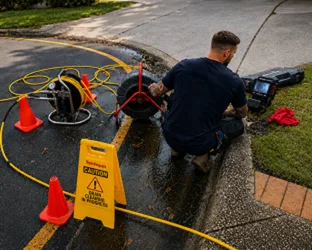
First job on site is stopping the damage: isolate, contain, make safe. Then you get a fixed price for the proper repair before it starts.

Most emergencies are permanently repaired on the spot. If a part has to wait for a supplier, you are left safe, watertight and functioning in the meantime.
Two minutes describing it on the phone settles it. Genuine hold-overs get booked at daytime rates, genuine emergencies get a van.
The phone is the fast lane, any hour. After-dark form enquiries ring the on-call plumber directly, nothing waits for office hours.

Leave your details and our local Castle Hill team will call you back fast.